
Monday, January 14, 2013
Thanks and a bathtub...


Tuesday, May 1, 2012
keep learning...

Tuesday, March 6, 2012
your old nonsense...
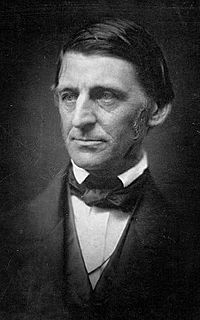
"Finish every day and be done with it. You have done what you could. Some blunders and absurdities no doubt crept in; forget them as soon as you can. Tomorrow is a new day; begin it well and serenely and with too high a spirit to be cumbered with your old nonsense. This day is all that is good and fair. It is too dear, with its hopes and invitations to waste a moment on yesterdays."
blessings
Sunday, February 12, 2012
Thursday, February 9, 2012
lay on more fuel...

"My strength faileth because of mine iniquity. — Pa. xxxi. 10.
Oh, say not so! thou canst not tell what strength
Thy God may give thee at the length;
Renew thy vows; and if thou keep the last,
Thy God will pardon all that's past.
Vow while thou canst, while thou canst, vow; thou
may'st Perhaps perform it when thou thinkest least.
George Herbert.
"When a man is to run a race of forty furlongs, would you have him sit down at the nine and thirtieth, and so lose the prize. We do not keep a good fire all day. and let it go out in the evening when it is coldest; but then rather lay on more fuel, that we may go warm to bed." — But "He that is strong with his own strength falls before temptation; he is humbled in the dust. . . . Whence is our strength? From God alone."
The God of Israel is He that giveth strength and power unto His people. Blessed be God. —Pa. 1xviii. 35."
Blessings
Wednesday, February 8, 2012
dreadfully...

"Whatever you may be sure of, be sure of this – that you are dreadfully like other people."
James Russall Lowell
(pictured)
Amen
(and thanks)
Tuesday, February 7, 2012
highly risqué...

"In 1840, Ralph Waldo Emerson and Margaret Fuller saw the Austrian ballerina Fanny Eissler dance-a performance that proper boston thought hightly risqué. They were very impressed. According to a story that made the rounds, Fuller told Emerson, "This is religion!" A Boston Unitarian lady, hearing the tale, exclaimed with a laugh" 'Both natural and revealed!'
Blessings
Wednesday, February 1, 2012
women are now everywhere...
I preached a sermon a couple of weeks ago comparing football coach and commentator Jimmy Johnson, Henry David Thoreau, and Jane Austen, a central part of which was my changing view of the latter. Jane Austen has become, for me, the greatest of novelists and I think I am a little in love with her...
In Googling Jane Austen and Unitarian, I came across this article from "The Unitarian Magazine" (1888) called "The Intellectual Development of Women." Interesting for the day...
"Women have succeeded as novelists because this kind of writing enables them to use the knowledge which is most easily within their reach, because of their large social experience and observation, and because it makes no great demand on wide reading and large educational attainments. Fiction requires in its production an interest in persons, which women have in a larger degree than men; and it is promoted by their love of the personalities and the sympathetic interests of life. Women possess the narrative or storytelling gift in much perfection; and this is especially required in thp writing of novels. It is owing to the influence of women, to a large extent, that a genuine realism in lictioii has been developed, a realism which is in sympathy with human nature, and which interprets the common life of humanity. The two most successful writers of realistic novels in England have been Jane Austen and George Eliot.
In poetry, women have always manifested three remarkable tendencies: the acceptance of a pure and ideal love of man and woman as the basis of their work, the interpretation of daily life with sympathy and affection, and the giving their singing an emotional richness and beauty of the highest type. [jln the fragmentary remnants of that . greatest of lyrical poets, Sappho; in the sonnets of Vittoria Colonna, the friend and inspirer of Michael Angelo, and in the poetry of Mrs. Browning, we find the same characteristic features of a pure and consecrated affection for a great man, a tender and yearning interest in human beings, an intimate sympathy with the beauties of nature, and a lofty moral purity. These are qualities which women have embodied in some, of the most delicate and sympathetic poetry we possess; and they are qualities which women are more and more, with each generation, adding to the poetry of human existence.
In the fields of general literature women have shown talent, courage and skill. Such women as Madame de Staël and Harriet Martineauhave shown that genius is not confined to the masculine sex, and that intellectual industry may go hand in hand with womanly graces of a refined and delicate type.
The intellectual influence of women has been shown, not so much by the number of great thinkers and authors which have appeared among them, as by their general influence on the life of the last three centuries. The number of women of great intellectual gifts is limited, at least so far as the literary manifestations of those gifts are concerned, and but few great books have been written by women; but the general literary habit and taste which characterize our time are very largely the product of the influence exercised by women. They have been of the ut most importance to literature in creating a reading public, and in giving to authors that sympathy and appreciation which are necessary to the best results.
In the early days of Samuel Johnson, to take a single not remote example, literature had a most precarious existence, dependent upon patronage or else leading to beggary. Johnson's own career was full of bitterness and humiliation; for he was a denizen of Gnib Street, and Grub Street meant all that was distressing and abject, at that period, in the life of an intellectual man. Johnson broke away from the slavery of patronage, and established the career of literature upon an independent basis. One most important condition existed in his day, which enabled him to do this; and that was the influence of educated and intelligent women, who gave him a reading public. As soon as women were educated in considerable numbers a great reading public was created, and authorship became an independent and self-respecting profession.
Women are now everywhere, in civilized countries, the chief sustainors of the intellectual life; they form the great body of church goers, lectnre attendants, readers of books and teachers of the young. Women as a mass now give to literature and to ideas far more of time and appreciation than do the mass of men. If they have not as yet become the intellectual leaders of the world, they exercise a very great influence in giving tone and direction to the literary spirit of the time."
Blessings
Thursday, January 26, 2012
rest...

" Is not true leisure
One with true toil?
Rest is not quitting
The busy career,
Rest is the fitting
Of self to one’s sphere.
’T is the brook’s motion,
Clear without strife,
Fleeing to ocean
After its life.
’T is loving and serving
The Highest and Best!
’T is onwards! unswerving,
And that is true rest.
Work, and thou wilt bless the day
Ere the toil be done;
They that work not, can not pray,
Can not feel the sun.
God is living, working still,
All things work and move;
Work, or lose the power to will,
Lose the power to love."
blessings
Thursday, January 19, 2012
sawing wood...

This from the biography of John Sullivan Dwight discussing his years at Harvard Divinity School...
"In the Divinity School, as in the college, Dwight's one great interest was music. Near his own were the rooms of his lifelong friends, Theodore Parker and Christopher P. Cranch. Parker had no love of music and no capacity for its production, but Cranch was only less devoted to it than Dwight. When the two music-lovers were one evening playing together, they heard a great din in the hall. On Dwight's opening the door, Parker was discovered sawing wood. When asked why he was so engaged in that place, he replied, "You disturb me with your music when I wish to study, and I will have my fun in return." He kept on with his sawing until the music was silenced."
Blessings
Wednesday, January 18, 2012
a one and a two...

I try very hard to appreciate the incredible blessing that modern times are in regards to music. When I want to listen to the greatest music ever written and performed I have only to push a button. This blessing, of course, has within it a curse. Many years ago, people had to play music in order to hear it. It's scarcity engendered a truer appreciation...
The Boston Unitarians and the Transcendentalists had various reactions to music. Thoreau loved his flute while Emerson had virtually no ear for music at all. Of all the Boston Transcendentalists, only John Sullivan Dwight dedicated himself to music.
An early champion of Beethoven, Dwight created and edited "Dwight's Journal of Music" for which this was the founding statement:
"The tone to be impartial, independent, catholic, conciliatory, aloof from musical clique and controversy, cordial to all good things, but not eager to chime in with any powerful private interest of publisher, professor, concert-giver, manager, society, or party. This paper would make itself the 'organ' of no school or class, but simply an organ of what may be called the Musical Movement in our country, of the growing love of deep and genuine music, of the growing consciousness that music, first amid other forms of Art, is intimately connected with Man's truest life and destiny. It will insist much on the claims of 'Classical' music, and point out its beauties and its meanings, not with a pedantic partiality, but because the enduring needs always to be held up in contrast with the ephemeral. But it will also aim to recognize what good there is in styles more simple, popular, or modern, will give him who is Italian in his tastes an equal hearing with the German, and will even print the articles of those opposed to the partialities or the opinions of the editor, provided they be written briefly, decently, and to the point."
More on Dwight to come...
Blessings
Tuesday, January 10, 2012
Marking the Hours...

Blessings
(I suppose it is just barely possible that most Unitarians don't have a strong Anglo-Catholic side but the book is still a great read!)
Thursday, January 5, 2012
irreparable solitude...

"Every man wrestles with his fate not in the public amphitheatre, but in the profoundest secrecy. The world sees him only as he comes forth from the concealed conflict, a blooming victor or a haggard victim. We hate or pity, we strive or sleep, we laugh or bleed, we sigh and yearn ; but still in impassable separation, like unvisiting isles here and there dotting the sea of life, with sounding straits between us. It is a solemn truth that, in spite of his manifold intercourses, and after all his gossip is done, every man, in what is most himself, and in what is deepest in his spiritual relationships, lives alone. So thoroughly immersed is the veritable heart behind the triple thickness of individual destiny, insulating unlikeness and suspicion, that only the fewest genuine communications pass and repass; rarely in unreserved confidence is the drawbridge lowered, and the portcullis raised... Occasionally, urged by overstress of curiosity and tenderness, taking the dearest ones we know by the hand, we gaze beseechingly into their eyes, sounding those limpid depths, if haply, reading the inmost soul, we may discern there a mysterious thought and fondness, answering to those so unspeakably felt in our own. But again and again we turn away, at last, with a long-drawn breath, sighing, alas, alas! No solicitation can woo, no power can force, admission to that final inviolate sanctuary of being where the personality dwells in irreparable solitude."
Have a nice day and...
Blessings
Monday, January 2, 2012
the true destiny...

"The true destiny of man is the fruition of the functions of his being, the purest and fullest exercise of his faculties, in their due order, in internal unity and in external harmony. He should therefore seek to perfect himself in the light of the great standards of truth, virtue, beauty, humanity, and God ; and to be contented with himself as reflected by these standards. To seek, instead of this, to see himself flatteringly reflected in the estimation of other people, in whose judgments these standards are often refracted in broken distortions, is the sure way to wretchedness. He who aims at perfection, going out and up in thought and feeling from his defects to its standards, will be happy. He who aims at fame, coming down in thought and feeling from his rich desires to the poor facts, will be miserable. Happiness is the successful pursuit of an aim. Perfection is the grandest of aims, and the only one in which a continuous success is morally possible for all. The happiest of men are the saints and mystics, in whom the social exactions of self are lost in a fruition of the sublimest standard; each wave of force goes out and dies in ecstasyvon a shoreless good. But the selfish plotter feels each wave of force rise and move inward to die, with egotistic disgust, of extinction in the centre. Whoever would live contented and die happy must not pursue public applause, but must give more than is given him, and love without asking a return."
Blessings
Friday, December 30, 2011
the world is a proud place...
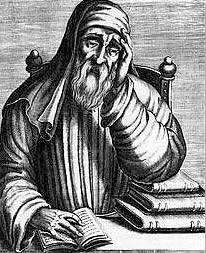
"Go with mean people and you think life is mean. Then read Plutarch, and the world is a proud place, peopled with men of positive quality, and with heroes and demigods standing around us, who will not let us sleep."
If it naive to want to believe in the world as a "proud place" when all about it appears "mean" then count me among the naive...
Blessings
Monday, December 19, 2011
misappropriation and superficiality...

Readers of this space know that I love Ralph Waldo and the Transcendentalists. This, however, is a love that is not blind. The fascinating Orestes Brownson (as discussed by Arthur Verslouis in his "American Transcendentalists and Asian Religions" gets to the heart-or at least one of the hearts-of areas where RWE and the gang give me pause. Brownson, of course, carved his way through the liberal Protestant landscape before embracing authority and the Roman Catholic Church...
"In brief (writes Verslouis) Brownson's criticism is that Transcendentalism takes rhetorically for itself the highest stations attainable within the various traditions and offers no effective means for realizing those stations. And in this respect Brownson's critique is indeed valuable, as each of the traditions on which Emersonian Transcendentalism draws depends on following a particular path. So if one were to choose among its teachings without having followed that path, one could certainly be accused of doing the given tradition an injustice. Much better, says Brownson, to enter into one of those paths-in particular, that of the church-and to follow it. One at least avoids the sin of misappropriation and superficiality."
Blessings
Wednesday, December 14, 2011
life is but a dream sweetheart...

"...there is another subtle but important ramification to his affirmation of maya's or illusion's, universality: Through this recognition of the universality of illusion, Emerson is able to affirm the illusory nature of the individual self as well and thus to avoid the tendency toward solipsism that so haunts English and to some extent European Romanticism. After all, the logical conclusion of the doctrine of maya must be that the individual ego is also contigent, that if the external world is a dream, then so are we ourselves. If the essence of the Romantic fallacy was the psychologizing internalization of religious truth, then by denying the ultimate reality of the ego, Emerson is effectively transcending the fundamental trap of Romanticism.
According to Emerson, man is truly man only when he transcends his limited self; man is meant to be more than man, to be a 'transparent eyeball' (using an echo of a Plotinian phrase), to be a 'god' sitting among 'gods,' or not to be an 'I' at all. Many critics have suggested that Emerson was fundamentally an egoist, and no doubt this is true, for as Nakagawa Soen Roshi once said, we are all egoists. But insufficient attention has been paid to Emerson's focus on transcending the self, for it is here, on the poet's illuminaation or inspiration, that Emerson's works are often actually centered. Pivotal here are Platonism and the Vedanta."
The line between self absorption and self transcendence is a fine line indeed and maybe the chief role of religion is to illuminate that line...
Blessings
Wednesday, November 30, 2011
to triumph over old age

"To keep the heart unwrinkled, to be hopeful, kindly, cheerful, reverent that is to triumph over old age."
Blessings
Tuesday, November 29, 2011
the most dependent creature on earth...

"1. I call attention to the general fact that every increase of faculty, though it increases power, involves also an increase of needs. The stone in the quarry has no needs whatsoever. The air folds it round about, the rains fall on it, the sunbeams glow and flame on its surface, but the rock remains impassive, needing none of them. The tree adds to dead matter the element of organizing life, and air, rain and sunshine are essential to its existence. With the added faculties of animal life come added and corresponding needs. In man there is a sudden and vast enlargement of faculty, but with it an equal multiplication of the points of dependence on what is external to himself. Man, the most powerful, is also the most dependent creature on earth. The general law follows him into the spiritual life. The brute has neither hope nor fear for the morrow; but man is tortured by remorseful memories, is racked by anxieties, is at the mercy of hope and fear, lives a needy mendicant on human affections, his soul is awed by conscious relations with God, he recoils from the mysteries of the grave, and treads with trembling the borders of the eternal world. He is in the midst of the vast agencies of Nature and of God, and by the very intelligence which raises him above the animal, is made conscious of his weakness and dependence. And now, going one step farther, I add, that the higher the culture, the greater the needs... One might almost describe civilization as a condition of multiplied needs—physically, mentally, morally, a condition of multiplied needs. It is no accident, but the merciful law of God, that the same civilization which develops individual power shall create the restraints of dependence and the humanizing influences of mutual needs. Thus culture invariably increases need. It awakens the sensibilities, it gives them a keener edge, it multiplies their demands, it carries a man out of himself, and connects his wellbeing with a constantly enlarging circle of influences external to himself—making him at the same time more self-subsistent and more dependent."
More tomorrow...
Blessings
Monday, November 28, 2011
the culture of our higher faculties...
.jpg)
I have read a fair number of 19th Century Unitarian Sermons in my time and a recurring theme, I think it safe to say, is the desire to square the Christian revelation with the increasing secularism and perceived rise in "the general activity of the intellect" of the time.
This an Advent collect and part one of a sermon from the more conservative end of the "squaring." It is by a Boston Unitarian staple, Ephraim Peabody...
ADVENT. Collect.
Almighty God, give us grace that we may cast away the works of darkness, and put upon us the armour of light, now in the time of this mortal life, in which thy Son Jesus Christ came to visit us in great humility; that in the last day, when he shall come again in his glorious majesty, to judge both the living and dead, we may rise to the life immortal. And this we beg in the name of our Mediator; though whom we ascribe unto Thee all honour and glory, now and ever. Amen.
THE NEED OF A DIVINE REVELATION INCREASES WITH THE PROGRESS OF CIVILIZATION.
A SERMON FOR THE FIRST SUNDAY IN ADVENT.
"But put ye on the Lord Jesus Christ, and make not provision for the flesh, to fulfil the lusts thereof. Rom. xiii. 14.
In entering upon that period of the year which calls our attention to the advent of Christ and the beneficent influence of his religion in past ages, it becomes us to consider it in its relation to the wants of our own time. The fundamental characteristic of the age, the source of many other characteristics, and fostered by what itself creates, is the immense and general activity of the intellect, and the direction of this activity to secular affairs. By the education of schools and the severer education of practical life, by individual freedom, by the multiplied and multiplying careers open to the enterprising and aspiring, by the poverty which rebels against its restrictions, by the luxury which would make the world tributary to its pleasures, by the prizes held out on every side to the clear mind and the energetic will, the general intellect is stimulated to an activity in secular pursuits such as the world never saw before. One of the results of this intellectual and secular activity is seen in the theory, that, in some inexplicable way, the advance of knowledge supersedes the necessity of revelation; that, in the growing light of civilization, Christianity is less needed, that it is becoming obsolete, that it has been a good religion for rude ages, that it is good now for the ignorant, but that the intelligent and the cultivated may find, in the study of nature and the human heart, what answers their purposes quite as well and is more satisfactory.
The text, taken from the lesson of the day, implies that, in putting on the Lord Jesus Christ, we are laying aside what is low and sensual, and making provision for the higher faculties of our nature. The inference from this is, that in proportion to the culture of our higher faculties will be our need of His religion and the extent of its influence over us.
The precise point, however, which I would urge, is this ;—that the increased intellectual activity of the age, instead of diminishing, increases the need of an authoritative religious revelation, both in regard to the faith and practice of men."
Blessings
Subscribe to:
Posts (Atom)