Thursday, November 24, 2011

This from Henry David...

"My thanksgiving is perpetual. It is surprising how contended one can be with nothing definite - only a sense of existence."

Amen and blessings to all

Wednesday, November 23, 2011

Cool, cool water...

Though I almost never post anything from later than the last century and a half, I offer this under the category of family pride. It is a video done by our 5th and 6th grade class of which son Henry is a member and spouse Carrie is a teacher. The video was filmed, compiled and edited by daughter Molly. It was "premiered" at our Guest at Your Table kickoff...

http://www.youtube.com/watch?v=8YkL3YXH8ag&feature=youtube_gdata

blessings

Tuesday, November 22, 2011

the whole of our lives...

This "Thanksgiving Song" by Henry Ware Jr...

"THANKSGIVING SONG.

November, 1840. Tune, Sandy And Jenny.


Come, uncles and cousins; come, nieces and aunts;
Come, nephews and brothers, — no wonts and no cants:
Put business, and shopping, and school-books away;
The year has rolled round; — it is Thanksgiving-day.

Come home from the college, ye ringlet-haired youth,
Come home from your factories, Ann, Kate, and Ruth;
From the anvil, the counter, the farm come away;
Home, home, with you, home; — it is Thanksgiving-day.

The table is spread, and the dinner is dressed;
The cooks and the mothers have all done their best:
No caliph of Bagdad e'er saw such display,
Or dreamed of a treat like our Thanksgiving-day.

Pies, puddings, and custards, pigs, oysters, and nuts, —
Come forward and seize them, without ifs or buts;
Bring none of your slim, little appetites here; —
Thanksgiving-day comes only once in a year.

Thrice welcome the day in its annual round!
What treasures of love in its bosom are found!
New England's high holiday, ancient and dear!
Twould be twice as welcome, if twice in a year.

Now children revisit the darling old place,
And brother and sister, long parted, embrace;
The family ring is united once more,
And the same voices shout at the old cottage door.

The grandfather smiles on the innocent mirth,
 And blesses the Power that has guarded his hearth;
He remembers no trouble, he feels no decay,
But thinks his whole life has been Thanksgiving-day.

Then praise for the past and the present we sing,
And trustful await what the future may bring:
Let doubt and repining be banished away,
And the whole of our lives be a Thanksgiving-day."

Blessings

Monday, November 21, 2011

let your feet run...

"My entire Philosophy," wrote Ralph Waldo to Carlyle, "teaches acquiescence and optimism." It has become my foundational quote and is here fleshed out in RWE's famous, "Oversoul."

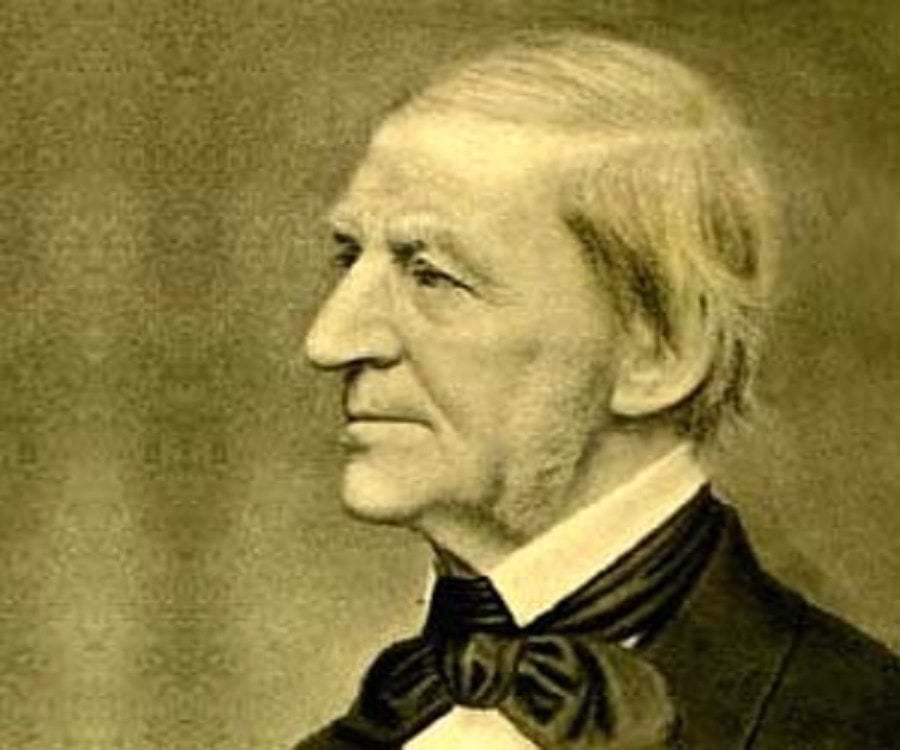
"Ineffable is the union of man and God in every act of the soul. The simplest person, who in his integrity worships God, becomes God; yet for ever and ever the influx of this better and universal self is new and unsearchable. It inspires awe and astonishment. How dear, how soothing to man, arises the idea of God, peopling the lonely place, effacing the scars of our mistakes and disappointments! When we have broken our god of tradition, and ceased from our god of rhetoric, then may God fire the heart with his presence. It is the doubling of the heart itself, nay, the infinite enlargement of the heart with a power of growth to a new infinity on every side. It inspires in man an infallible trust. He has not the conviction, but the sight, that the best is the true, and may in that thought easily dismiss all particular uncertainties and fears, and adjourn to the sure revelation of time, the solution of his private riddles. He is sure that his welfare is dear to the heart of being. In the presence of law to his mind, he is overflowed with a reliance so universal, that it sweeps away all cherished hopes and the most stable projects of mortal condition in its flood. He believes that he cannot escape from his good. The things that are really for thee gravitate to thee. You are running to seek your friend. Let your feet run, but your mind need not. If you do not find him, will you not acquiesce that it is best you should not find him? for there is a power, which, as it is in you, is in him also, and could therefore very well bring you together, if it were for the best. You are preparing with eagerness to go and render a service to which your talent and your taste invite you, the love of men and the hope of fame. Has it not occurred to you, that you have no right to go, unless you are equally willing to be prevented from going? O, believe, as thou livest, that every sound that is spoken over the round world, which thou oughtest to hear, will vibrate on thine ear! Every proverb, every book, every byword that belongs to thee for aid or comfort, shall surely come home through open or winding passages. Every friend whom not thy fantastic will, but the great and tender heart in thee craveth, shall lock thee in his embrace. And this, because the heart in thee is the heart of all; not a valve, not a wall, not an intersection is there anywhere in nature, but one blood rolls uninterruptedly an endless circulation through all men, as the water of the globe is all one sea, and, truly seen, its tide is one."

Blessings

Wednesday, November 16, 2011

Arabian within...

This on how the Concord Transcendentalists read books found in Arthur Christy's "The Orient in American Transcendentalism" first published in 1932...

"How carefully did the Concordians read books? As a boy barely in his majority, Emerson confessed that his 'cardinal vice of intellectual dissipation' was 'sinful strolling from book to book, from care to idleness.' He added that with this malady he belonged to the incurables. Over two decades later, in 1843, he was still uncured. Some one must have taunted his with the remark, 'Your reading is irrelevant.' Emerson's answer was defiant. 'Yes, for you, but not for me. It makes no difference what I read. If it is irrelevant, I read it deeper. I read it until it is pertinent to me and mine...A good scholar will find Aristophanes and Hafiz and Rabelais full of American history.' Elsewhere he explained his meaning in other terms. 'Only so much of Arabian history can I read as I am Arabian within."

Blessings

Friday, November 11, 2011

the gentleman and scholar...

Ephraim Emerton  (18 February 1851 – 3 March 1935), scholar, devout Unitarian, teacher and writer on the kind of education that nourished the "Gentleman and Scholar"...

"If we try to analyze this somewhat vague conception, we find that the essential quality of this earlier education was that it was in no sense professional. That is what men tried to express by the word "liberal," a word one hesitates now to use, because one fears to be understood as thereby describing all other education as "illiberal." No such opposition was ever intended, nor was it felt by the generations which came and went under those conditions. They rejoiced in the privilege of spending a certain period of youth in studies and in a mental attitude which had in view no direct practical use of what they were acquiring; in other words, no professional or technical aim. At the conclusion of that period they were not, and knew they were not, fitted to carry on any given work of life. They did believe, however, that they had made the best preparation for living, no matter what specific line of work they might follow. If, at that moment, they were to enter the world of scholarship, they were without technical training in any field. That was all to come, and they were as ready to begin the necessary professional discipline in their way as were the lawyer, the physician, and the engineer in theirs.


What they had had was a chance to fix solidly in their mental character the largeness and the beauty of the intellectual life. They had had time to think and to ripen without concern as to just whither their thinking and their unconscious development were leading them. No matter into what direction they might now turn their activity, they were bound to carry with them that essential thing which, for lack of a better name, we agreed to call the liberal spirit. If they had made a proper use of their chance they could never be mere specialists in their field. Their special and technical skill must always be infused with that higher and larger spirit of culture to which the professional spirit is always and necessarily more or less antagonistic. Expressed in terms of the inner life, such a scholar was, and was felt to be, a gentleman. No one cared what his origin might be. There was no fixed type to which he was forced to correspond. There might be endless diversity in his outward expression of himself; only, through all diversity and with every allowance made for original advantage or disadvantage, there was the inevitable stamp of the gentleman and the scholar."

Blessings

Tuesday, November 1, 2011

the unity of all nature...

Ralph Waldo in "Emerson's Plutarch" by Edmund G. Berry.

"Emerson's earlier Stoicism is orthodox Roman in its doctrine of God within man and it is also pantheism, since God is in all nature and nature includes man. Some of the Stoics used in defending themselves against the charge of pantheism an argument which Emerson later could have used when the same charge was made against him, but he would have regarded the argument as quibbling and evasion; the Stoics said that God is in the universe and hence in man but He is not evenly distributed throughtout the universe. There is deity in all things but, said the Stoics, "as a man is called wise, being wise in mind, though he consists of mind and body; so the world is called God from its soul, though it consists of soul and body. Only at a later stage in his thinking, after he had achieved a state of mind something like Stoic equanimity, or to put it in another way, after his religion had been toned down so that it consisted of not much more that Stoic ethics, did Emerson cautiously approach the Stoic solution to the problem of the relation of man, nature, and God. In the essay "Worship" in "The Conduct of Life," Emerson speaks of "God's delegating his divinity to every particle." This certainly sounds Stoic but the term delegating is perhaps carefully chosen; the particle is not itself God as the Stoics would have it. Emerson still shies away from a full acceptance of Stoicism; rather ihis solution is Platonic and Christian-and it is surprising that h3e has not adopted it before: "Man is the image of God." Still, he adds, "there is no flaw in either Epicurianism or Stoicism."
This Plutarchan blend of Platonism and Stoicism lies not far below the surface of much of Emerson's thought about man and God. It appears in his doctrine of face, for to Emerson and the Stoics, the unity of all nature provides, or itself is, a natural necessity."

Blessings