An activist for social reorganization and justice, William Henry Channing was born in Boston, served churches in New York, Liverpool, and Washington D.C. (during the Civil War) and was the Chaplain of the House of Representatives in 1863-64. While in New York, he started a Journal "The Present" from which comes the story I have been excerpting. "The Norwegian Emigrant" continued...
"And who were Mr. and Mrs. White? If you had asked of the poor of , they would have said, " Who are they ? why they are honest employers who pay a dollar when wages are six shillings, and liberal counsel who give best advice without a fee. Who but he filled his house, parlors and chambers, and all with Irish families when the great fire burned the square in — street ? Who but he, old as he is and sometimes sick, went round with pails of coffee and soup when the flood drove the inhabitants from their homes on the river, and sheds and tents were put up for them on the hill there ? Who but they nursed us when the cholera broke out ? He sent Mrs. Lane's deaf and dumb boy to the Asylum, and put him in the stage himself and paid his fare. He bought the bible printed for the blind in raised letters for Mr. Wise, and Mrs. White sat by him whole afternoons teaching him to read. Who but he got the old jail, which was too dirty for pigs torn down, and the new one yonder built, and carries books to the prisoners and talks with them, and finds them work when they come out ? There are no black dungeons there we can tell you, where the crazy people are kept caged and whipped and starved on dirty straw, for he had all of them sent to the Hospital. And if you should go some day to the public school, you would find him there asking the children questions and bidding them good bye with some pleasant words that they never forget. And his wife, bless her angel heart, is just like him. Whom have they not helped ? It would take all day to tell the half they do of acts of love. They are friends to the friendless, practical Christians." But perhaps some of the " unco guid" as Burns calls them, would have responded : " Nay ! not so ! Mr. and Mrs. White are neighborly, quiet, harmless, kind; but they do not believe right, and are not orthodox. Pity such moral people should be Infidels."
If you had asked now good Mr. and Mrs. W. to give account of themselves against this heavy charge of heresy, they might have changed the subject, or kept silence, or plead guilty, or made a cheerful repartee; but the heart would have said through their calm smiling eyes and cloudless brows, " we are fellow mortals who believe that life as it is, is far too hard for the most, and that there is not the least danger of making it too happy; that we need not be afraid to help others, for we owe all we have and are to others help of us; that men seem worse than they really are, and that even the worst can mend ; that society breeds the crimes it punishes, and that kind words are surer cures of evil than legal penalties. We have too many faults ourselves to judge others; we hope for a time when justice and love will do away with these unnatural and monstrous contrasts of condition; and meanwhile we share as we can what our father has entrusted to our stewardship."
(the conclusion tomorrow...)
Blessings
Saturday, October 2, 2010
Friday, October 1, 2010
"Poor Ulric"...
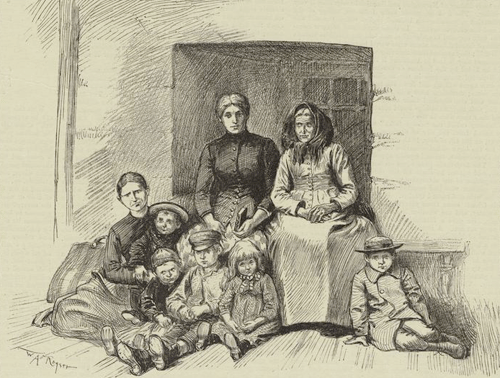
My people are Midwestern Norwegians and Germans and, therefore, I was drawn to this story written by William Henry Channing and published in his short-lived journal "The Present." Written in the somewhat melodramatic style of the times, it nonetheless paints a picture of the emigrant life. "SCENES FROM ACTUAL LIFE. No. I. THE NORWEGIAN EMIGRANT" continued...
"Ulric had left Norway in the early summer with some score of his neighbors to settle in Iowa, with money enough in his purse from hard earnings to buy him a small farm, and with good hope of getting a shelter over the heads of his family before cold weather. But the oft repeated, only sadder because frequent tale, of imposition and outrage upon emigrants, had been true of him. A drunken captain in a leaky water-logged ship spun out their voyage to a most unexpected length; their store of provision was exhausted; famine, bad air, a closely packed crowd, the heat of calms, and above all, care and trouble, bred fever on board, and late in August he landed sick at quarantine. Recovery was slow; expenses, necessary and unnecessary of all kinds eat up his means ; the duplicity of a fellow lodger when they had actually reached New York lessened still more his little capital; in a dirty, crowded inn, amidst filth and noise his baby was born; his companions more fortunate had gone a month and more before him; he paid to a cheating agent who assured him that he could reach the far west his full fare round the lakes, with a company of Germans who did not speak his language, as he did not theirs, had he left Albany; and now where and how thought he, as with little Fritz's hand in his he trudged over the frozen ruts, where and how were he and his to winter. Pious parents had taught Ulric in maxims, written into his very heart, that the Providence which tempers the wind to the shorn lamb, counts the very hairs of the head of the humblest and poorest. And but for faith in this law of divine love which shines warm in adversity, his prospect in life would have seemed more cheerless and bleak than the bare trees and heathery hills of this strange land. But Fritz! what was hardship to a boy. He picked up the glossy chestnuts which the wind had shaken from the open burrs, laughed at the squirrels which chippered as they ran on the fences and hid, and echoed the caw of the crows as they flew southward overhead. "What bankrupts in happy love would grown men be in this hard world, were it not for the treasure of joy which youth stores in the heart.
Weeks passed, and December with its fogs and rains, and January with its snows and thaws had come, Ulric gaining as he could with the saw, for which he paid the last dollar, small sums amidst many rival applicants for the poor privilege of earning an honest livelihood by humble toil, when at last his goods were pawned, his funds exhausted, and one evening he found himself standing in the street holding his baby, while the children warmed their feet by stamping on the sloppy pavement, and their mother was for the first time in her life begging bread. The lamps shone,on the sad group. Many stopped for a moment and muttering "emigrants,"hurried on to comfortable houses. But at length a gentleman rather advanced in life, with a lady several years younger leaning on his arm, in the countenances of each of which a kindly smile lingered as if from pleased recollection of the visit of mercy from which they were returning, came to where they stood, and did not pass, but pressed poor Ulric's hand and patted the wet shoulders of the children, and drew from their imperfect words the story of their sufferings. " What can we do for them, Mary ; is not the room where the Carey's lived empty now ? There is a bed chamber adjoining, and a stove, and I think they will do very well. Let us get them there at once." To procure a cart, to place the children upon it, to find the mother, and give the driver his directions, was for this benevolent couple the work of a few moments; and then with Ulric they followed. It was an hour beyond their usual time of taking their evening meal, and it carried them far from their course through the melting snow and mild; but kindness was to them as daily food; the needy were ever their nearest kin, and love made the " longest way round their shortest road home," as they had often and often proved. Did not the face of Fritz, glowing red as he blew the fire, and the gentle form of the sick mother as sitting on the floor she rocked to sleep her infant, and the half bashful, half confiding group of the children hungrily eating their supper, and Ulric's courteous thanks, as cap in hand he bowed them from the door, mingle pleasantly in their dreams that night ?" More tomorrow...
Blessings
Thursday, September 30, 2010
thy multiplied anxieties...
William Henry Channing, today most remembered for "My Symphony" and, perhaps, his memoir of his Uncle William Ellery Channing, had a fascinating career which included, for a time, founding and editing a journal called "The Present." Undertaken while Channing was preaching in New York, "The Present" lived from 1843-1844. Of his qualifications for this work Channing said,
"This little Monthly, then, has quite liberal aims ; and it may justly be asked what are its editor's qualifications. With unaffected sincerity he confesses that he has none, other than the craving after a temper and spirit more in harmony with our privileges, a willingness to admit and abandon error and folly when exposed, independence, to some degree, from sectarian and party bonds, faith in the present inspiration and providence of God, hope growing ever stronger in the tendencies of the Age to universal good..."
This morning, part one of an article from the first number of "The Present" called,
SCENES FROM ACTUAL LIFE.—No. I. THE NORWEGIAN EMIGRANT. BY THE EDITOR.
Keen blew a northwest wind over the brown hills and through the valleys, where a line boat lay on the Erie canal, shut in by ice, one morning in November. A sleety rain had closed in snow on the previous day, followed by gusty breezes from the plains of Canada, and when the sun had set mid rolled up clouds of purple and gold with an orange green sky glittering behind, and stars flashing bright overhead, the boatmen had muffled themselves in their warmest coats, while the shivering boy whipped up his horses, anxious passengers clustered on deck, and the captain as he saw the ice fibres shoot over still spots of water, muttered, " 'tis our last trip this season." Midnight had settled calm over the leafless woods and white capped summits, and plains where the dry grass rustled ; ice had formed fast on the narrow line of the canal, and the crowded inmates of the boat had heard a crackling and hissing as she broke her way. An hour or two after there had been a call from the shore, the helmsman had summoned the captain, the half waked sleepers looking out of the doors and windows had seen the lamps gleam in long lines over the frozen surface, and all hands had turned in for a quiet nap ; the boat was fast.
And now it was morning. Welcome day, may be to the crew, who through the summer months had smothered in narrow bunks under their low roofed boat, sluggishly journeying to and fro over the same monotonous way, and who could now find change of labor in familiar places. Welcome day may be to the captain, sleeping late in dreams over his summer's gains and his winter speculations. But a most unwelcome day to the poor emigrants, who friendless, moneyless, houseless, without place in society or work before them, with no intelligible speech to make known their wants or ask their way, found themselves on the verge of winter about to be turned on shore amid the woods some half day's journey from . The hearts of those strangers were chill as they heard the summons of men made hard by familiarity with similar scenes of distress to leave the boat, which, uncomfortable as it was, still seemed to have some warmth of home. But leave the boat they plainly must. And a few hours saw them, men and boys on foot, women and children on trunks and bundles in country wagons, making their way to the next inland city. What lessons of a true order of society might this tendency of the poor to cluster in crowds teach us. Among them was Ulric, of Norway, with his wife, an infant born some three weeks before, and five older children. Poor Ulric! It needed a heart as brave and patient as thine, to be kind and gentle and thoughtful, that day, amidst thy multiplied anxieties..."
More on WHC in the next few days, and more of the story of Ulric...
Blessings
(illustration: Norwegian immigrants in New York)
Tuesday, September 28, 2010
all is one and one is all...

Why Emerson will always be difficult to get one's head around, and why the (for me nearly life-long) effort will always be so rewarding. This from William James in his notebooks in 1905 (quoted in Buell's "Emerson")
"Emerson's metaphysics consisted in the platonic belief that the foundation of all things is an overarching Reason. Sometimes he calls this divine principle the Intellect, sometimes "the Soul," sometimes the One. Whate'er we call it, we are at one with it so far as our moments of insight go. But no one moment can go very far, and no one man can lay down the law for others, for their angles of vision may be as sacred as his own. Hence two tendencies in Emerson, one towards absolute Monism; the other towards radical individualism. The sound contradictory enough; but he held to each of them in its extremist form."
Blessings
Monday, September 27, 2010
the uses of history...
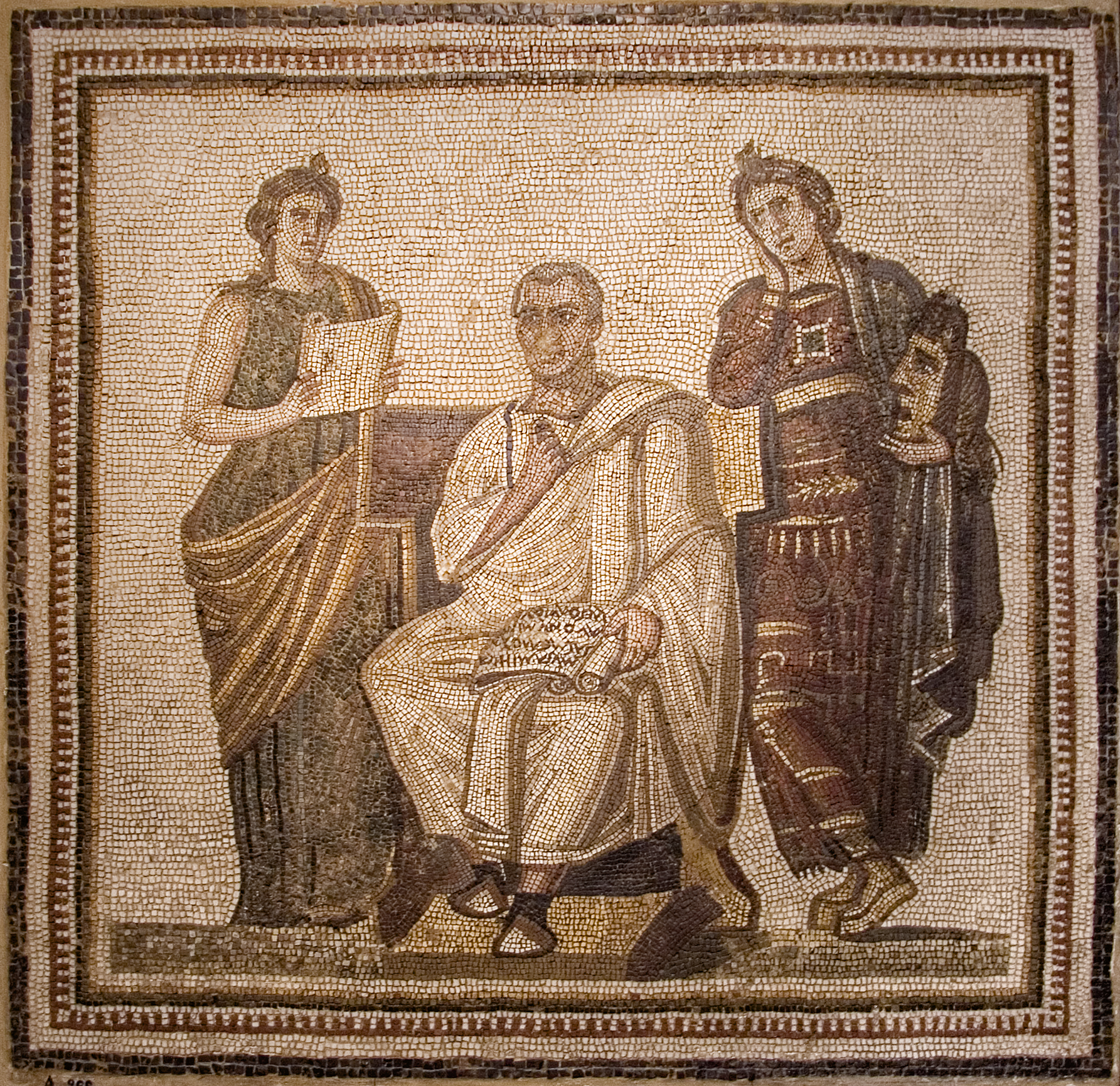
"...reading Virgil...Thoreau was struck by passages about the buds swelling on the vines and fruit scattered about under the trees. The point, he told himself, was that 'It was the same world.' His second observation followed naturally enough. If Virgil's was the same world as ours, then 'the same men inhabited it.' Neither nature nor human nature has changed, in essence, from Virgil's time to ours..."
And this from the Thoreau's Journal:
Sept. 27, 1857. How out of all proportion to the value of an idea, when you come to one, in Hindoo literature for instance, is the historical fact about it, the when, where, etc., it was actually expressed, and what precisely it might signify to a sect of worshipers! Anything that is called history of India or of the world is impertinent beside any real poetry or inspired thought which is dateless."
Blessings
(Illustration: "Virgil and the Muses of History and Tragedy")
Saturday, September 25, 2010
capable of humility...
One more from "The Tao of Emerson"...
Tao (v. 22)
"The partial becomes complete; the crooked straight;
The empty, full; the worn-put, new:
He whose desires are few gets them;
He whose desires are many goes astray/
Therefore the sage holds in his embrace
the one thing, humility, and manifests it to all the world.
He is free from self-display, and therefore he shines;
From self-assertion, and therefore he is distinguished;
From self-boasting, and therefore his merit is acknowledged;
From self-complacency, and therefore he acquires superiority.
It is because he is thus free from striving
that therefore no one in the world is able to strive with him.
That saying of the ancients
that "the partial becomes complete" was not vainly spoken-
All real completion is comprehended under it.
RWE
Those who are capable of humility,
of justice, of love, of aspiration,
Stand already on a platform that commands
action and grace.
This energy did not descend into individual life
on any other condition
than entire possession.
It comes to the lowly and the simple;
It comes to whomsoever will put off
what is foreign and proud.
It comes as insight, it comes as
serenity and grandeur.
Blessings
Friday, September 24, 2010
life is sturdy...
Verse 45 of the Tao first translated by James Legge and then in words by Emerson arranged by Richard Grossman (from his "The Tao of Emerson:"
Shall find his vigor long endure.
Of greatest fullness, deemed void,
Exhaustion ne'er shall stem the tide.Do thou what's straight still crooked deem;
Thy greatest art still stupid seem,
And eloquence a stammering scream.
Constant action overcomes cold;
Being still overcomes heat.
Purity and stillness give the correct law
to all under heaven.
RWE
The men we call greatest are least
in this kingdom.
He that despiseth small things
will perish little by little
Let him esteem nature a perpetual counselor
and her perfections the exact
measure of our deviations.
Do no craze yourself with thinking,
But go about your business anywhere.
Life is not intellectual or critical,
but sturdy."
Blessings
Subscribe to:
Posts (Atom)