Saturday, November 28, 2009

O come, O come Emmanuel...

It is difficult to believe that the season of Advent is upon us.  This wonderful and sometimes painful time of preparation and anticipation is a powerful opportunity for cultivating a more devotional temper.  Last year I wrote a simple Advent devotional for individuals or families.  It consists of four posts (one for each Sunday in Advent) and can be done each day of the week.  If you do not find it to your liking, I encourage you to find or develop a practice for yourself during this season.

Many blessings

Thursday, November 26, 2009

For each new morning...


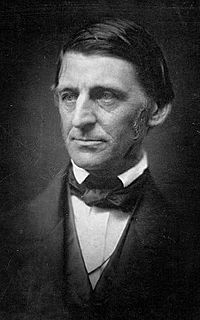
With this simple prayer from Ralph Waldo Emerson, BU wishes everyone a truly wonderful Thanksgiving.

"For each new morning with its light,
For rest and shelter of the night,
For health and food, for love and friends,
For everything Thy goodness sends.

~Ralph Waldo Emerson
 
Blessings

Wednesday, November 25, 2009

all was spirit and all was life...


I had a talk yesterday with a friend and member of our church who has had a powerful spiritual experience (indeed is living a powerful spiritual experience) and has rejoined the Catholic Church.  Whenever I talk to this deeply passionate and articulate man, I am struck by many things. Yesterday, I was most struck by his combination of deep faith and his strong belief that such faith was not bound to any one religion or denomination.  It is a tendency (probably to some degree in all of us) to bind the two and liberal religionists are certainly no exception.  This morning, my devotional reading included James Freeman Clarke's "The Word of God Not Bound."  One of the guiding reasons for this blog is to relate the combination of deep piety and "rational religion" of the Boston Unitarians...this from Clarke is a pretty fine statement of that spirit.

"THE WORD OF GOD NOT BOUND.

LIBERAL Christianity may be defined, not as any belief, nor as any system of opinions, but as something going deeper. It is a habit of mind ; a way of considering all opinions as of secondary importance ; all outward statements, methods, operations, administrations, as not belonging to the essence of religion. Liberal Christianity comes from that spiritual insight which penetrates the shell and finds the kernel; sees what is the one thing needful, and discovers it to be not the form, but the substance; not the letter, but the spirit; not the body, but the soul; not the outward action, but the inward motive; not the profession, but the life.

In this sense, the Apostle Paul was the first Liberal Christian, and the founder of that Liberal Christianity which is not confined to any sect or party, any denomination or church; but which inspires and animates to-day the best men in all denominations, from the Roman Catholics on the one side to the most radical come-outers on the other side. And the motto and maxim of Liberal Christianity, everywhere, is given in our text, that " The word of God is not bound." The most zealous Roman Catholic is a Liberal Christian when, however strongly he believes in the superior value of his own church, he yet does not believe that the word of God is bound to it, but cheerfully admits that there may be good Christians outside of it. A Trinitarian is a Liberal Christian who, holding the dogma of the Trinity himself, does not think it the only essential form of words according to which God may be seen and worshipped. A Unitarian is a Liberal Christian only when he believes that a sincere believer in the Trinity can be as much of a liberal and rational Christian as himself. Liberal Christianity does not exclude zeal for one's own church, or one's own belief ; but it fully recognizes that these belong not to the vital and eternal part of religion, but to the temporal and fugitive part.

If this be so, why, you may ask, do I not call Jesus himself the founder of Liberal Christianity? Because, as long as he taught, all Christianity was liberal, and could not be otherwise. The body had not come, the forms had not arrived ; as yet dogma did not exist. Christianity was then all life, essence, spirit. It had not begun to run into any ruts of routine....All was spirit and all was life."

Blessings

Tuesday, November 24, 2009

the kind friend always near...


James Freeman Clarke retells the Gospel story of the Good Samaritan in his sermon "The Spirit of Fear and the Spirit of Power"

"The main purpose of Christianity is to save us from sin, and thereby to save us from its consequences, which are moral and spiritual death. And it saves us, not by inspiring fear, but by inspiring faith and courage. It assures us that " sin shall not have dominion " over us, because we are " not under the law, but under grace," and because the strength of sin is the law. What does this mean ?...

A certain man went down from Jerusalem to Jericho, and fell among thieves, who stripped him of his raiment, and wounded him, and departed, leaving him half dead. This man is the human soul on its journey through human life and the experiences of earth. The thieves are temptations from without and within, which strip the soul of its heaven given raiment of innocence, wound the moral nature, and leave the human being, despoiled of peace and hope, perishing in the wilderness of the world. Then there comes a priest — a preacher of the moral law—and says, "Arise and flee, or thou wilt perish on the sand ; or, if not, the robbers will return and slay thee. Thou must exert thyself and go to the city; it is many miles distant, but thou must reach it, or die." And having said this, the priest departs. The man rouses himself, goes a little way, but, weak through his wounds, drops on the ground more discouraged than before. Then comes the Levite, who represents the ceremonial law, and tells him that the holy church, by its sacraments and its ministers, its holy creed, its holy books and its holy days, will endeavor to obtain from God his cure, and so passes by on the other side. Then comes the gospel, as the good Samaritan, on its journey of grace and peace through the world. It has compassion on the soul because it is weak and sinful, It pours the oil of God's forgiving love into the wounds of the conscience ; the wine of inspiring truth and an infinite hope into the mind. It sets him on its own beast, and brings him to the inn, and takes care of him, and makes a provision for his permanent relief and cure. The soul, made alive by Christian faith, feels that it has not to struggle unaided in the work of duty. It feels the kind friend always near, the supporting arms always ready, the provision for future need all made ; and so, inspired with new faith and courage, is able to begin a new life."

blessings

Monday, November 23, 2009

some special grace...


I was deeply struck, this morning, by these words of James Freeman Clarke.  I have always admired his ability to go from the ideal to the practical and nowhere is this quality more needed than in speaking of love; love to Christ or love to our fellow beings.  We are encouraged, by our popular culture to have a Hallmark view of love.  The reality of daily life can never live up and the Hallmark moments are easily forgotten.  I believe deeply that every person does, as Clarke puts it, manifest "some special grace." and when we look to that grace and not to the fault...well, then we all are elevated.  These words from Clarke's sermon "If Any Man Be In Christ, He Is A New Creature"

"To be in Christ, we must love him. But love means much more than blind affectionate instincts, or clinging attachments, or sudden emotions. It is far more noble than that. It is that flame in the soul, caught by the sight of superior beauty and truth and good, which animates and elevates one's whole being, bringing one into harmony with the ideas of those we love. It implies some intelligent sympathy, however small, with their best aims and purposes. Love, true love, attaches itself to that which is better, nobler, higher, than what we have in ourselves. Love looks up to receive a higher influence, to be inspired by a purer life. Love must elevate us, or it is not really love.

If so, you may say, how can there be mutual love ? how can two persons really love each other ? since if neither is better than the other, there can be love on neither side ; and if one is better than the other, then only the lower nature can love the higher. Thus it would seem there can be no such thing as mutual love. The answer is, that each may have some quality higher than the other. God has made us different, to this end, that each may be a revelation of some truth, beauty, good, to another mind. He has made every one of us capable of manifesting some special grace, some peculiar charm of sweetness, or nobleness, or truth. He has made every one of us capable of manifesting something of God's divine beauty to our fellowmen, and when we really love, it is because we see that, and love that. We see and love something of " God manifest in the flesh."

Blessings
(the painting is "The Jewish Bride" by Rembrandt

Sunday, November 22, 2009

My footsteps here below direct...


This from James Freeman Clarke's "Church of the Disciples" service book...a hymn for guidance. 

"God's Guidance"       Jung Stilling

1 Thou, who upon the eternal throne,
Dost weigh the fates of all below,
And ever wear'st the radiant crown
Of worlds unnumbered round thy brow:
Thy wisdom formed the plan sublime
Of what man's future course shall be;
The path didst shew which I must climb
To reach my final destiny.

2 Till then let power Divine protect,
And heavenly peace my spirit cheer,
My footsteps here below direct,
Till I before thy face appear.
The present seed I now shall sow
To ripen for eternity,
O let it to perfection grow,
Then take thy pilgrim home to thee.

blessings

dependent offspring...

This prayer from the "Service Book for the Church of the Savior" 2nd. ed.  The Church of the Savior was organized in 1845 and consisted of a faction that broke away from James Freeman Clarke's Church of the Disciples when he (Clarke) invited Theodore Parker to speak there.  Regular readers know that I am a great admirer of James Freeman Clarke.  Though he was a "moderate" his invitation to Parker (when he was receiving precious few) precipitated a split. Clarke himself remained on good terms with the "schismatics" who became poster people for the conservative wing of Unitarianism.  And they had a good service book...

"O Lord, merciful and gracious, we, thy dependent offspring, would now humbly and sincerely thank thee, because thou hast given us life, and by thy bountiful providence hast always nourished, directed and governed us. For our reason. education and religion; for all the gifts of nature and of grace ; for our Saviour, Christ; for our redemption, and instruction in the truth ; for thy repeated calls to us ; for all the patience which has waited for us, and all the mercy which has spared us ; for all the enjoyments of this present life, and for all thy promises, and all our hopes of a better life to come, we bless and magnify thy holy name. And grant, 0 Lord, that thy mercies may be followed by our obedience ; and that we may so walk in the light of thy favor, and in the paths of thy commandments, that living here to thy praise, we may at last be received to thyself, to rejoice forever in thy presence; which we ask in the name, and as disciples of him who died that we might live ; through whom to thee be ascribed all thanksgiving and praise, both now and forever. Amen."

Blessings